
2021 has been the year of the transfer-taxtoken. But what is a transfer-tax token and what risk for investors come withit?
A transfer-tax token is a unique type ofERC20 token that imposes a fee on each transaction. This fee, usually a smallpercentage, is deducted automatically whenever the token is transferred betweenall form of addresses, including AMM pairs.
Incentivizes Holding: The transaction feediscourages frequent trading and encourages long-term holding.
Redistribution: Some tokens redistribute apart of the transaction fee to existing holders, rewarding them simply forholding the tokens. This can be automatically incorporated in the token, makingit a reflection token or simply done manually by creating staking contractswhich uses the tax as reward.
Auto Liquidity: Some of these tokensautomatically add a portion of transaction fees to liquidity pools, enhancingoverall liquidity and stability.
Deflationary Mechanisms: They can alsoinclude features like token burning, gradually reducing the total supply toincrease scarcity.
A Tool for Grifters?
These tokens can be exploited by creatorswho may disproportionately benefit from high transfer fees.
Grifters might fill their bags by settinghigh fees, which they partly receive, especially in tokens where a portion ofthe fee goes to a specific wallet or group of holders.
The most significant risk involves thecreators increasing the transaction fee to an exorbitant level (e.g., 100%),effectively trapping holders' funds in the token - turning the contract into ahoneypot scam.
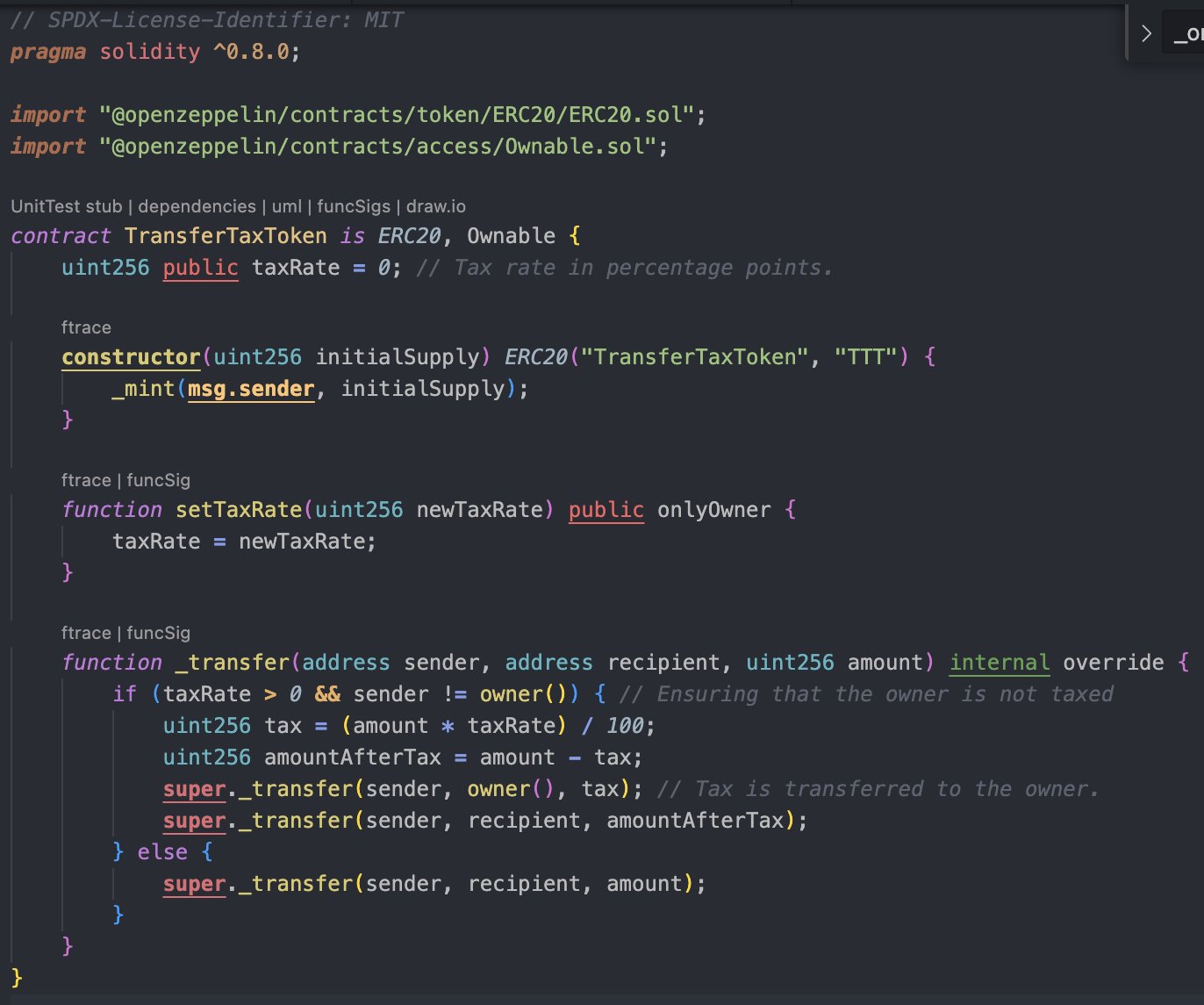
This is a standard ERC20 implementationwith a transfer-tax, settable to > 100%. The tax is automatically sent tothe owner's wallet.