
For smart contracts, there's one featurethat, while incredibly powerful, can also be a source of confusion fornewcomers: delegatecall. But fear not! We're here to break it down into thesimplest terms possible.
A delegatecall is a call that allows one contractto invoke a function from another contract, with a twist. Instead of operatingin the context of the called contract, it executes in the context of thecalling contract. This means that while the code is from the external contract,any changes to storage variables are made in the storage of the callingcontract. With an explanation we will illustrate what exactly that means.
The power of delegatecall lies in itsflexibility. It's instrumental in scenarios like proxy contracts orarchitecture where a main contract acts as a gateway to various functionimplementations. Essentially, it allows for a contract to dynamically adopt newlogic without the need for redeployment. This modular approach cansignificantly enhance a contract's adaptability over time.
To truly grasp delegatecall, let's walkthrough an illustrative example involving a simple staking contract.
Original Staking Contract: Imagine we startwith a straightforward staking contract that allows users to deposit theirtokens. However, in its initial form, it lacks the functionality for users towithdraw their staked tokens:
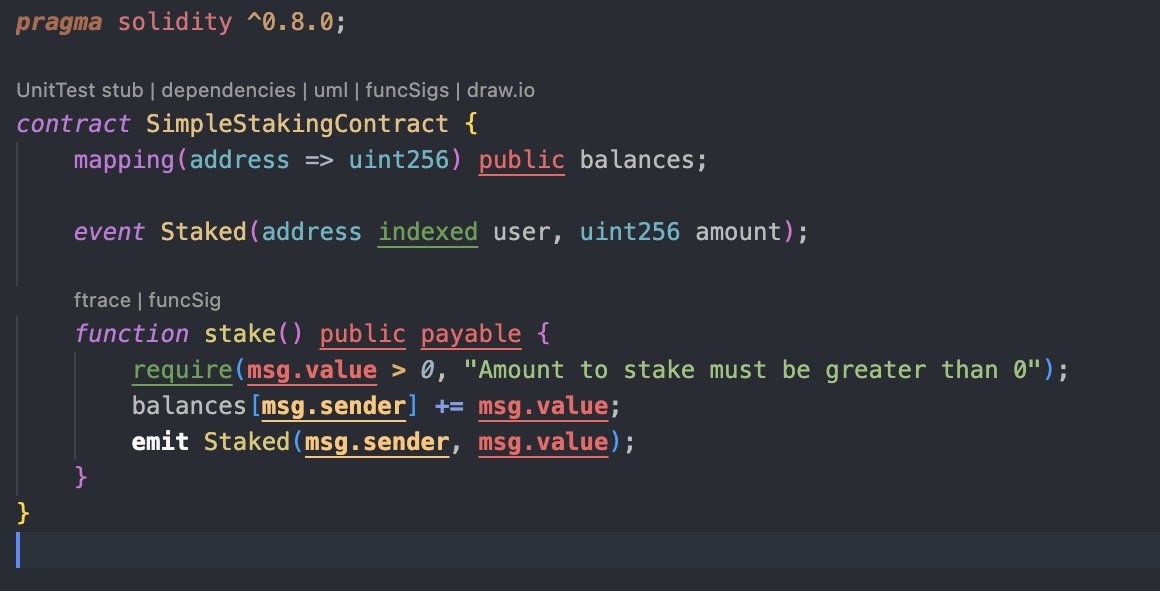
Enhanced with delegatecall:
To introduce withdrawal functionality withoutimplementing a withdraw function, we can modify the staking contract to allowdelegatecall to another address:
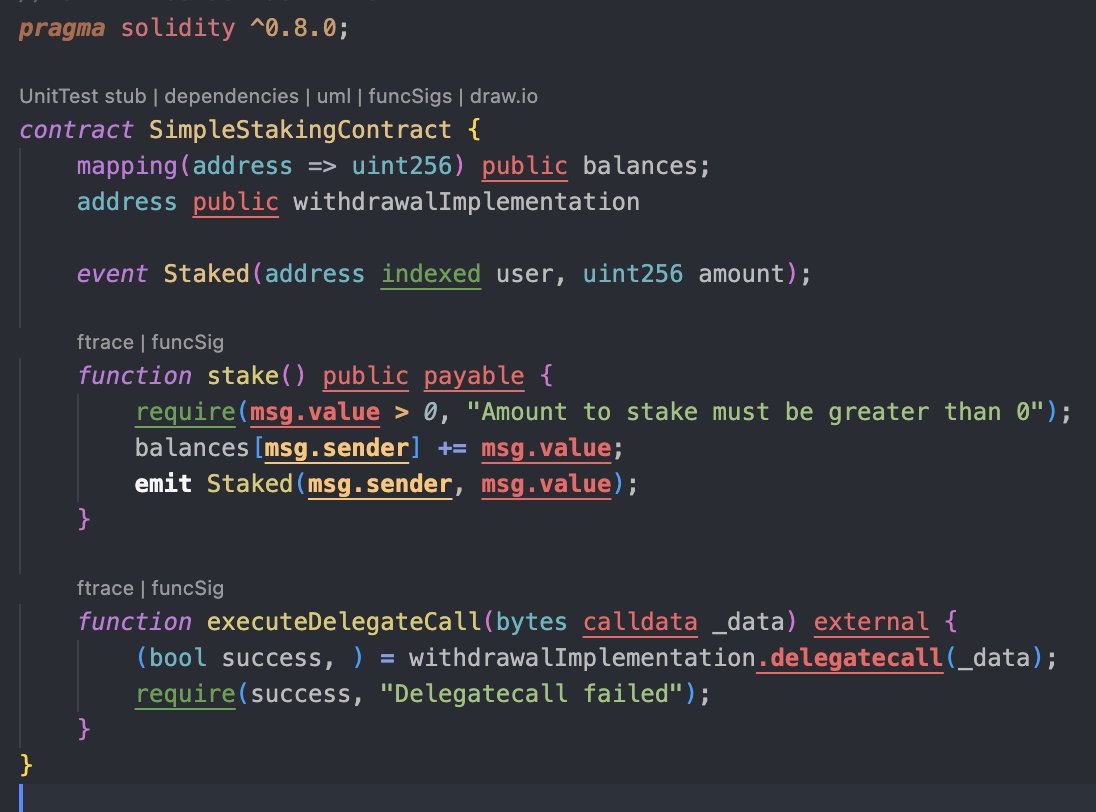
The withdrawalImplementation can expose thewithdraw function. In our example, it is important to ensure that theimplementation does not expose any other logic, otherwise this could betriggered as well.
By utilizing delegatecall, we can nowinteract with a separate contract that implements the withdrawal logic. Thismeans users could theoretically withdraw their stakes if the staking contractdelegates a call to a contract containing the withdrawal function. This woulddecrease their balance and transfer out tokens, all done on behalf of the maincontract but using the implementation contract’s logic.
While the flexibility offered bydelegatecall is undeniable, it comes with significant risks. If not properlysecured, it can be exploited to execute unauthorized code, potentially leadingto loss of funds or other critical issues. For instance an unguardeddelegatecall could enable a malicious actor to drain a contract's funds bydirecting the call to a malicious contract (or function).
Therefore, whenever you encounter adelegatecall in a Solidity codebase, approach with heightened scrutiny.Understanding the context in which it's used and ensuring there are adequatesafeguards against unauthorized manipulation are crucial steps in mitigatingpotential vulnerabilities.