
In Solidity, modifiers and Privatefunctions are commonly used to restrict access to certain functionalitieswithin a smart contract. However, theydiffer in their implementation and usage.
Modifiers in Solidity are special functionsthat can be appended to other functions to add additional functionality orconstraints to them. They are commonly used to enforce access control byrequiring certain conditions to be met before allowing the execution of afunction.

Modifiers offer a convenient way to enforceaccess control without duplicating code across multiple functions.
They promote code reusability andmaintainability by allowing developers to define access control logic in oneplace and apply it to multiple functions throughout the contract. When amodifier is applied to a function, the compiler essentially expands the code ofthe modifier into the function itself during compilation.
This means that each function that uses themodifier will include a copy of the modifier code. However, it's important tonote that this does not significantly impact the size of the deployed contracton the Ethereum blockchain.
The code is ultimately stored in bytecodeform, and the size difference between using modifiers and private functions isnegligible in practice.
On the other hand, private functions in Solidityare regular functions that are restricted to be called only from within thecontract that defines them. They cannot be accessed or invoked externally or byother contracts. Private functions are useful for encapsulating logic thatshould only be accessible within the contract and are not intended for externalinteraction. Here's how a private function is defined in Solidity:

Since private functions are not directlycallable from outside the contract, they are not included in the contract'sexternal interface.
However, they do still occupy space withinthe contract's bytecode. Private functions are included in the contract'sbytecode to facilitate internal function calls.
Thus, the argument that private functionssave space compared to modifiers is not entirely accurate. Both modifiers andprivate functions contribute to the size of the contract bytecode, but thedifference in size is typically negligible.
Knowing when to use modifiers versusprivate functions in Solidity depends on the specific requirements and designconsiderations of your smart contract. Here are guidelines for when to useeach, along with corresponding code snippets:
Reusability: You need to enforce the sameaccess control logic across multiple functions within your contract.
Readability: You want to clearly indicateaccess control requirements directly within the function signature.
Reducing Redundancy: You want to avoidduplicating access control logic across multiple functions.
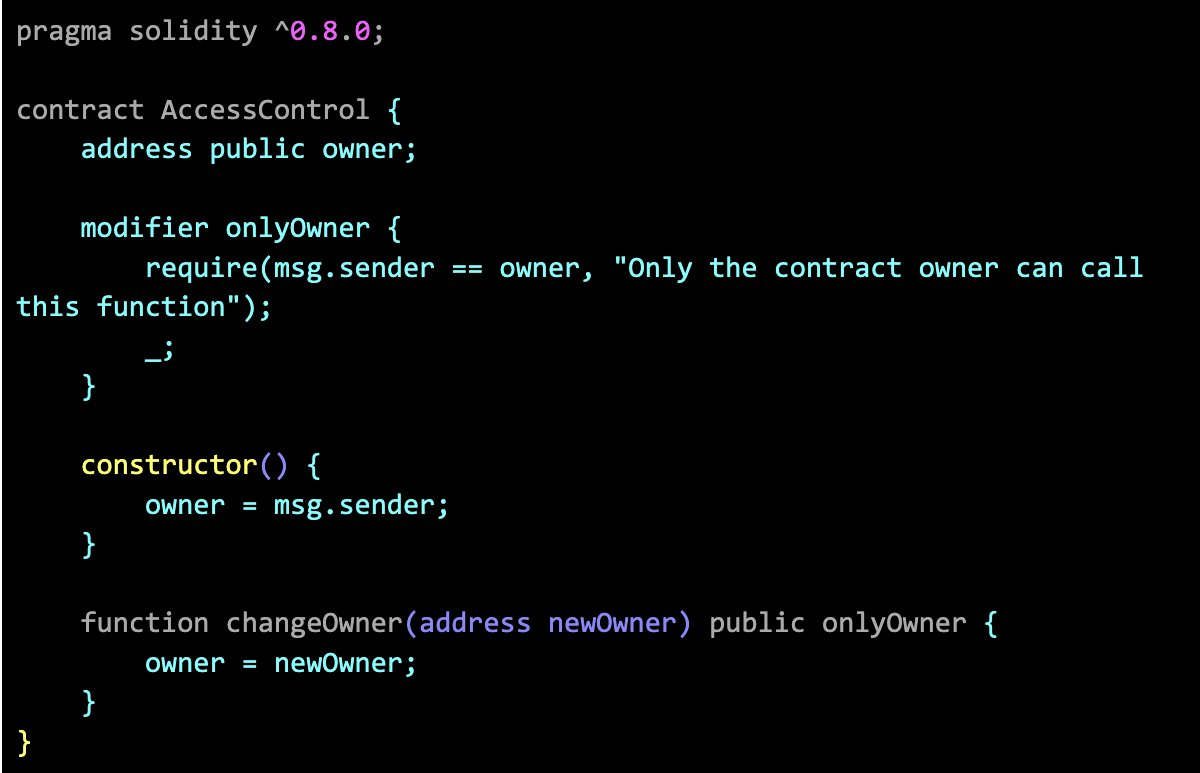
In this example, the onlyOwner modifierrestricts access to functions to only the contract owner. It is applied to thechangeOwner function, ensuring that only the owner can change the contractownership.
Encapsulation: You want to encapsulateinternal logic that is not intended to be accessed externally or by othercontracts.
Internal Operations: You need to performspecific operations that are not meant to be exposed to external parties.
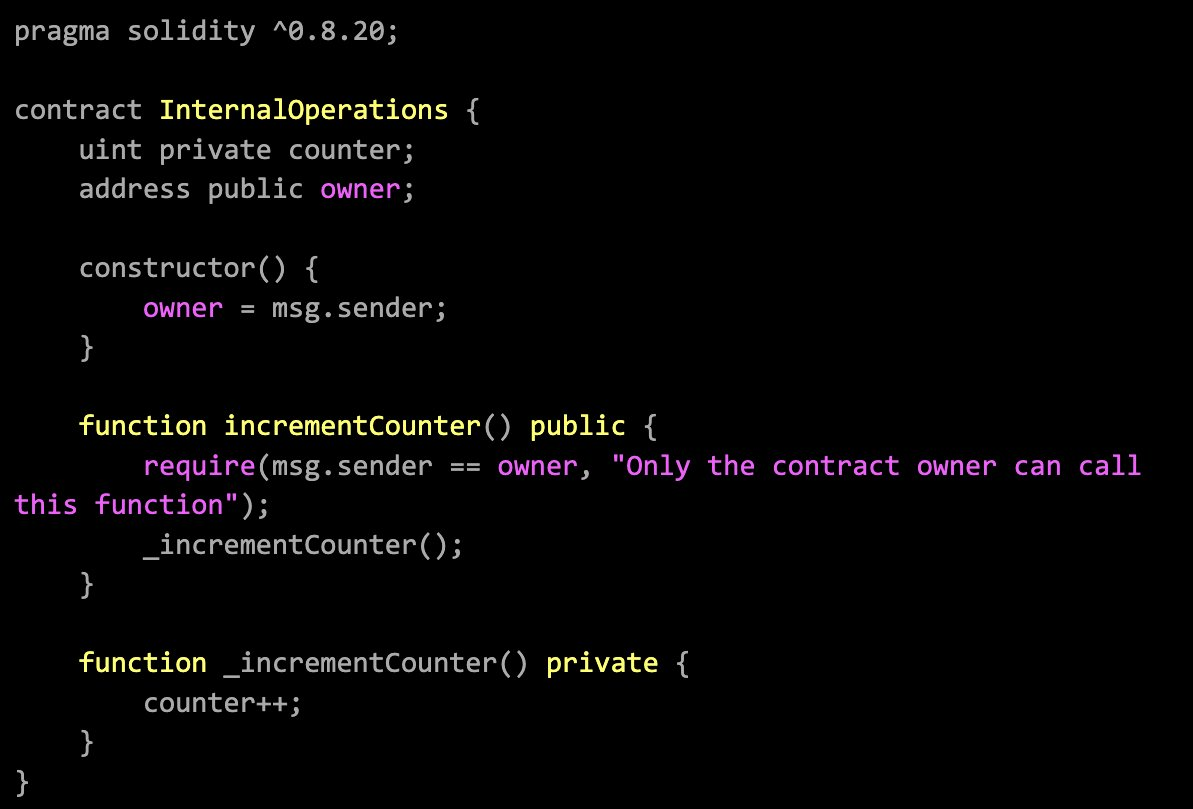
In this example, the _incrementCounterfunction is marked as private, indicating that it is only meant to be accessedinternally within the contract. It encapsulates the logic to increment thecounter and is called by the incrementCounter function, which enforces accesscontrol using a require statement.