The ERC4626 standard has introduced arevolutionary framework for tokenized vaults, offering a unified interface forinteractions with yield-bearing assets. However, there is a specificvulnerability type, which can significantly impact vaults, especially thoseaccumulating substantial value. Let's delve into the potential risks andexplore a simple yet effective mechanism that can mitigate these issues,ensuring depositor confidence and vault integrity.
Understanding the Risks: Inflation Attacksand Exchange Rate Manipulations Inflation attacks occur when an attackerexploits the mechanisms of a vault to artificially increase the exchange ratesuch that new depositors will receive less/no shares. Moreover, it can beparticularly concerning for ERC4626 vaults, where the exchange rate between theassets and the shares is dynamic and can be manipulated under certainconditions.
Exchange rate manipulation, on the otherhand, involves influencing the price at which assets are exchanged for shares.This risk is amplified in vaults that can accumulate large values, influencingthe exchange rate such that users will receive less shares than expected.Specifically if frontran or the deposit is stuck in the mempool. Users haveabsolutely no impact on the amount of received shares, once the transaction issubmitted.
ASimple Solution: Minimum Shares Out
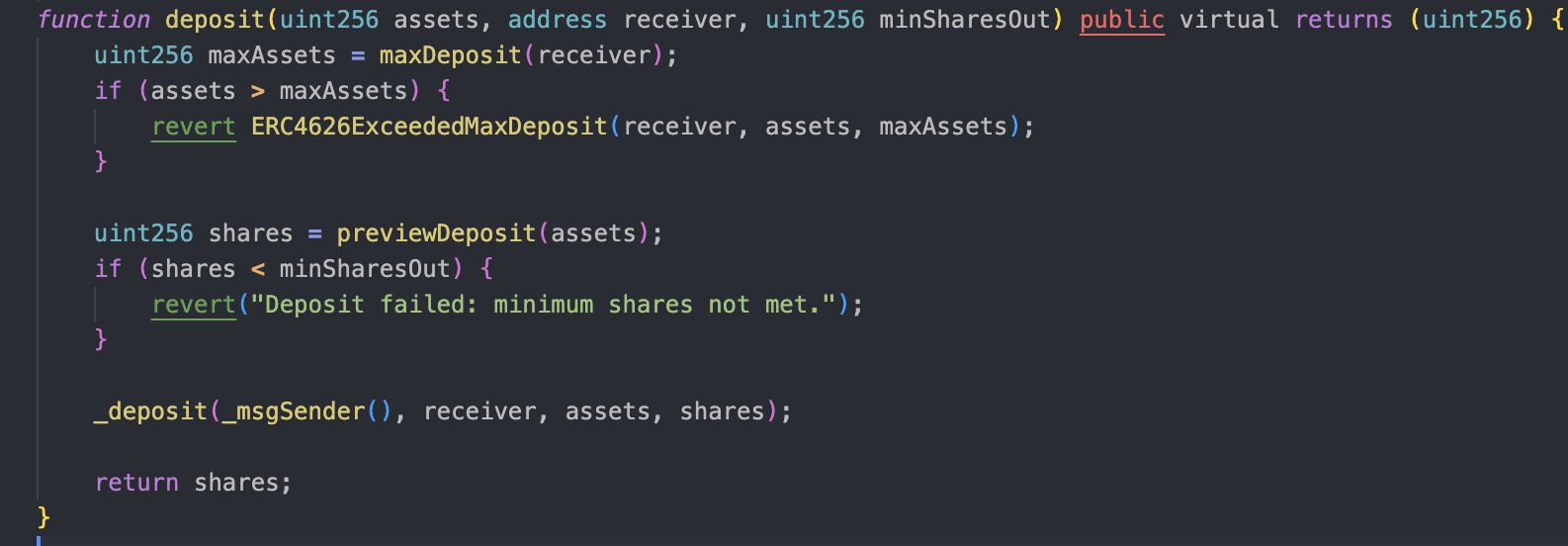
Addressing these vulnerabilities requires amechanism that aligns depositor expectations with the vault's operations,ensuring that the exchange rate at the time of deposit is both fair andtransparent. One such mechanism involves allowing depositors to specify a"minSharesOut" parameter upon depositing assets into the vault.
The "minSharesOut" parameter letsdepositors set a minimum threshold for the number of shares they are willing toaccept for their deposit. This threshold is based on their assessment of a fairexchange rate. If this number falls below the depositor's specified minimum,the transaction is automatically reverted, preventing the deposit fromproceeding.
This mechanism offers several keyadvantages:
Enhanced Security: By allowing depositorsto set a minimum share threshold, it reduces the risk of inflation attacks andexchange rate manipulations, as depositors have a direct say in the exchangerate they're willing to accept.
Increased Fairness: Depositors areempowered to ensure that they receive a fair number of shares relative to theircontribution, aligning their interests with the vault's performance. ImprovedConfidence: With mechanisms in place to prevent unfair dilution andmanipulation, depositor confidence in the vault is likely to increase,fostering a healthier ecosystem.
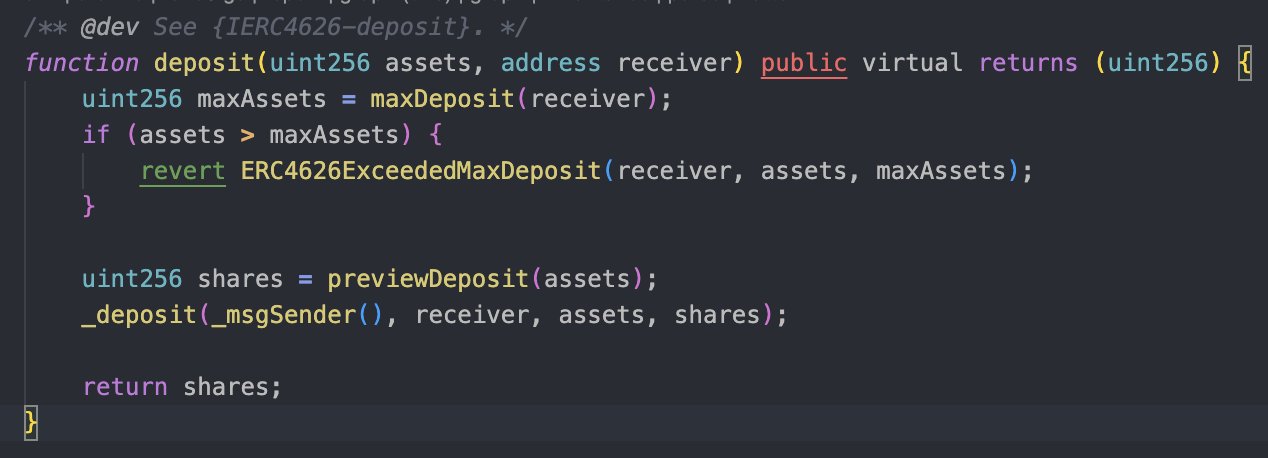
Implementing the "minSharesOut"parameter is straightforward and does not require extensive modifications toexisting ERC4626 vault contracts. The key is to introduce an additionalargument in the deposit function and a conditional check that compares thecalculated shares with the depositor's minimum expectation. This smalladjustment can significantly enhance the security and fairness of transactionswithin the vault.