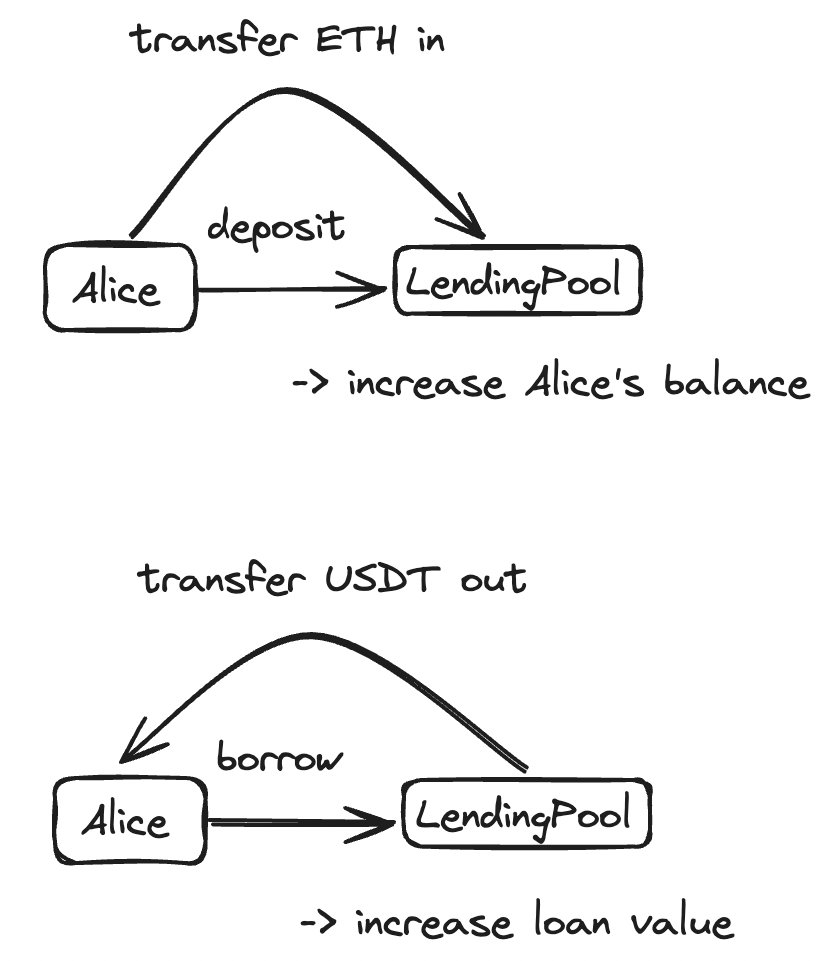
A lending and borrowing protocol is akin toa digital bank. It allows users to deposit cryptocurrencies like Ethereum (ETH)as collateral to borrow other tokens, such as stablecoins like USDT or anytrusted token which is employed by the protocol.
These are known as overcollateralizedloans, where the value of the collateral is higher than the loan itself. Thekey metric in these protocols is the Loan-to-Value (LTV) ratio. It's afinancial term that measures the ratio of the loan to the value of thecollateral. For instance, if you deposit $10,000 worth of ETH and borrow $5,000in USDT, your LTV is 50%.
But there's a catch: if your LTV ratioexceeds a certain threshold (say, 80%), you risk liquidation, where yourcollateral is sold off to pay the loan.
AAVE and Compound are two of the mostrenowned and 'battle-tested' protocols in the DeFi space. They have gainedpopularity for their robust security, user-friendly interfaces, and innovativefeatures.
1. Deposit 10 ETH Assume 1 ETH = $2,200.So, depositing 10 ETH means your collateral value is $22,000.
2. Borrow 15,000 USDT To calculate the LTVratio:
Borrowed Value / Value of collateral * 100
-> 68.18%
After borrowing, it's crucial to monitorthe ETH price. Remember, if the LTV ratio falls below 80%, you riskliquidation. To find the ETH price at which your LTV hits 80%, we'll use theformula:
Liquidation Price = Borrowed Value/(0.8 *ETH amount)
-> $1,875
That's the danger zone where you riskliquidation. In an effort to not get liquidated, either you must repay yourloan or increase your underlying value.
Retweet if you want me to do more tweets onlending protocols which could also include general vulnerabilities.