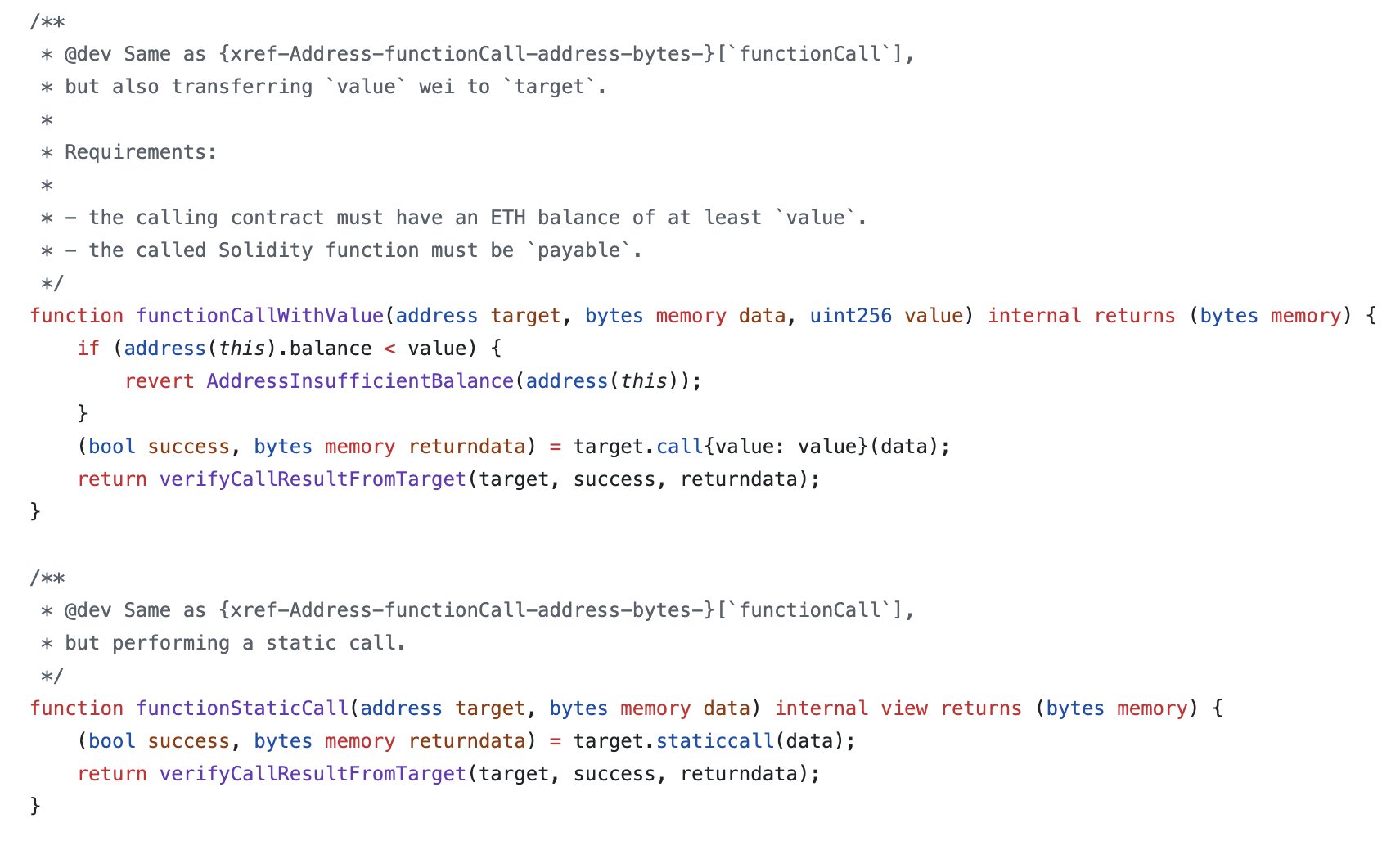
@OpenZeppelin has a library of secure andcommunity-vetted smart contracts that are foundational to developing robust andsecure applications on the Ethereum blockchain. You can explore their contractshere: https://github.com/OpenZeppelin/openzeppelin-contracts…
The best recommendation I can give anyonewho wants to start out with solidity and has basic knowledge is to simply auditthe OpenZeppelin contracts.
OpenZeppelin contracts are among the mostutilized pieces of code in the blockchain ecosystem. They form the backbone ofnumerous protocols, serving as the building blocks for creating tokens,securing transactions, and managing permissions, among other functionalities.By auditing these contracts, you're not only learning the syntax and semanticsof Solidity but also familiarizing yourself with the patterns and practicesthat are considered as the industry standard.
Given their widespread adoption,OpenZeppelin contracts are maintained with a high standard for security andefficiency. Auditing these contracts allows you to understand the securitymeasures and optimizations essential for developing secure smart contracts.
There's a profound difference betweenlearning from tutorials and getting your hands dirty with real code. AuditingOpenZeppelin contracts thrusts you into the latter, challenging you to thinkcritically about code structure, function optimizations, and potentialvulnerabilities. This practical experience is invaluable and far surpasses whatcan be learned through passive study.
As you audit OpenZeppelin contracts, you'renot just learning; you're preparing yourself for future projects. Many projectsrely on these contracts either directly or as a basis for customized solutions.By familiarizing yourself with them, you reduce the learning curve for futureprojects and position yourself as a knowledgeable developer in the eyes ofpotential collaborators or employers.
1. Familiarize Yourself with theDocumentation: Before diving into the code, spend some time with OpenZeppelin'sdocumentation. Understand the purpose of different contracts and how theyinteract with one another.
2. Choose Your Focus: Start with a categoryof contracts that interests you, such as ERC-20 token contracts, and graduallyexpand your scope to include others like ERC-721 (NFT) contracts, accesscontrol mechanisms, and security patterns.
3. Hands-On Practice: Try to extend,modify, or even break the contracts to see how they behave. This kind ofexperimentation deepens your understanding and helps you think like a smartcontract developer.