
The question of whether ERC777 tokens areinherently bad or if the issues stem from coding style is often discussed.Let's elaborate what's behind that
ERC777 tokens is the token standard's useof callbacks, specifically through its hooks. These hooks enable a smartcontract to react to token transactions, both incoming and outgoing, in realtime.
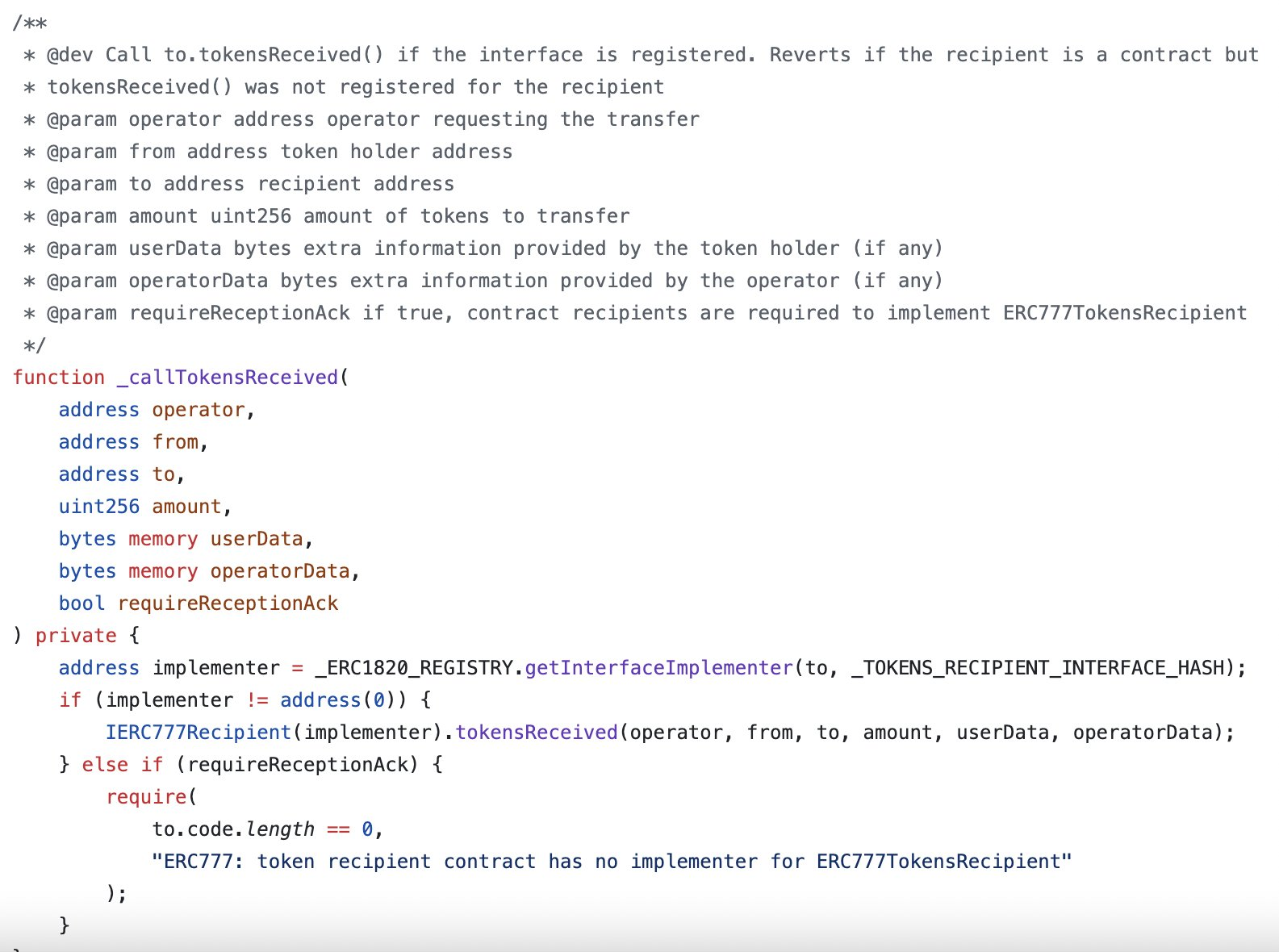
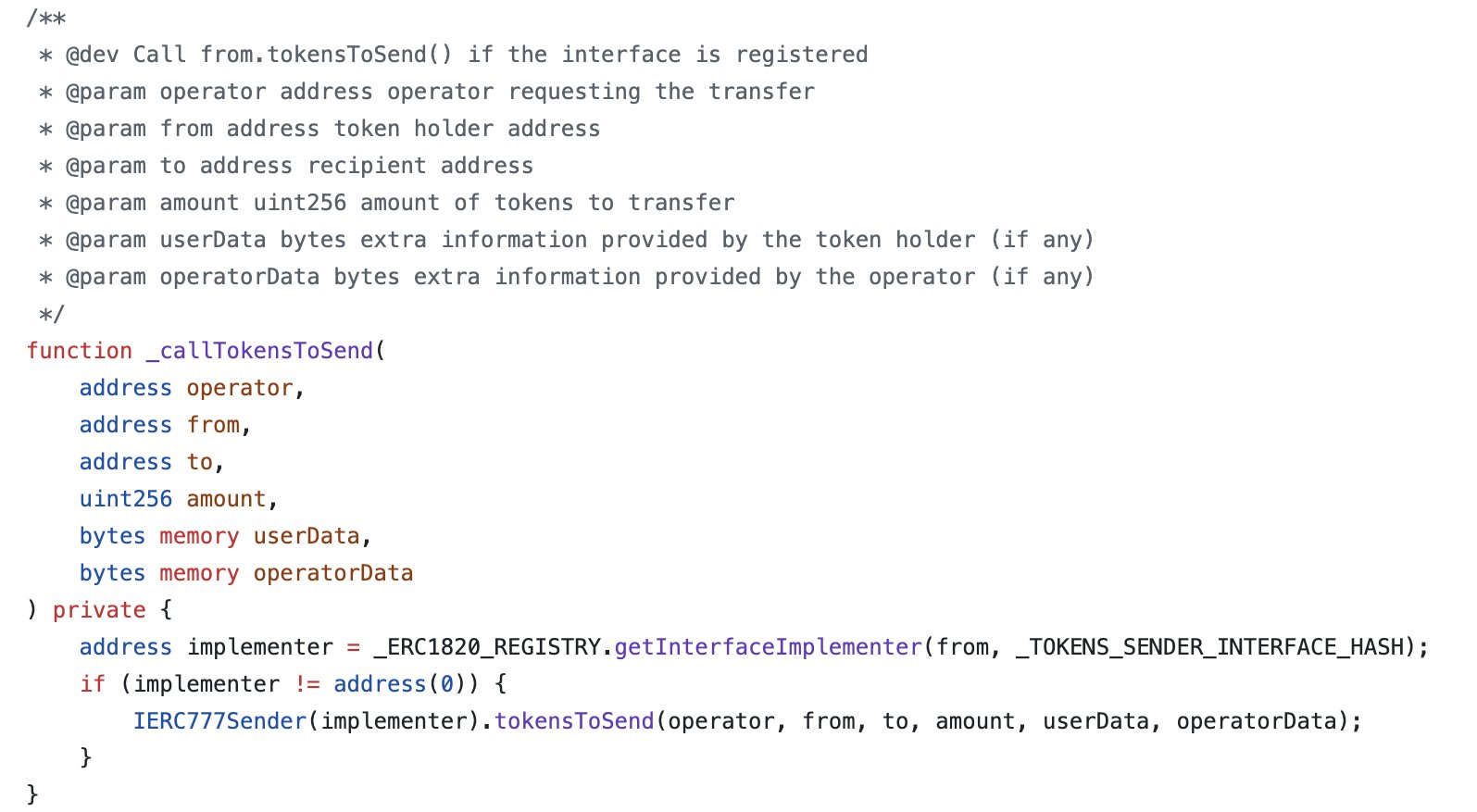
Similar to ERC777, other token standardslike gas tokens or ERC721 (notably when using safeTransferFrom) also invokecallbacks to ensure the safe transfer of tokens. The crucial point here is notthe token standard itself, but how these callbacks are implemented andinteracted with in smart contracts
The potential for abuse or unintendedbehavior arises when the smart contract's code does not adhere to secure codingprinciples. Specifically, issues emerge if the contract does not follow the"checks, effects, interactions" pattern or lacks a reentrancy guard.
Checks, Effects, Interactions: This patternsuggests that a function should first perform any necessary checks (e.g.,validating input or ensuring prerequisites are met), then make any statechanges before finally interacting with other contracts.
Reentrancy Guard: A reentrancy guard is amechanism to ensure that a function cannot be re-entered while it is stillexecuting. This is crucial for preventing reentrancy attacks, where an externalcall to another contract could re-enter the current function.
Therefore, the crux of the matter isn't theERC777 token standard itself. Instead, the issues often stem from howdevelopers implement their contracts that interact with these tokens.
Whennot carefully coded, especially without consideration for reentrancy and thesecure patterns of contract interactions, vulnerabilities can be introduced.This means that it is not the problem of implementing ERC777 tokens but ratherwriting smart contracts with bad design.