When using an EnumerableSet in Solidity,understanding its mechanics and potential pitfalls is very important for secureand effective smart contract development. An EnumerableSet is similar to anarray that ensures all elements are unique; it doesn't allow for duplicates.
When you attempt to add an element to theset, it will only be added if it's not already present in the set. Thischaracteristic makes EnumerableSet particularly useful for managing collectionsof unique items, such as a list of addresses or tokens.
However, a common oversight in manyimplementations of EnumerableSet is the handling of operation results.
Specifically, both add and removeoperations in an EnumerableSet return a boolean value indicating their success(true) or failure (false).
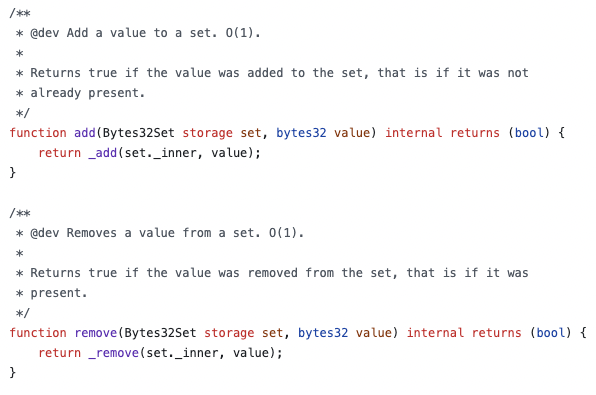
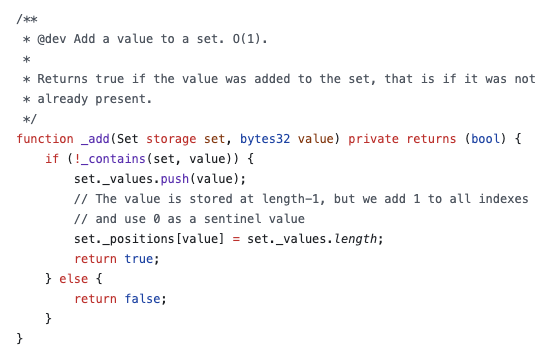
This design means that the operations arenon-reverting by default. In other words, if an add operation fails (becausethe item already exists), or if a remove operation fails (because the itemdoesn't exist), the transaction doesn't automatically revert.
This behavior (of not strictly requiringthe success) can lead to vulnerabilities. For instance, if a contract's logicdepends on the successful addition of an element to the set, and this operationfails without causing the transaction to revert, the contract might proceed inan inconsistent state. This could be particularly problematic in scenarioswhere the integrity of the set's elements is critical for the contract's logic,such as when managing permissions or assets.
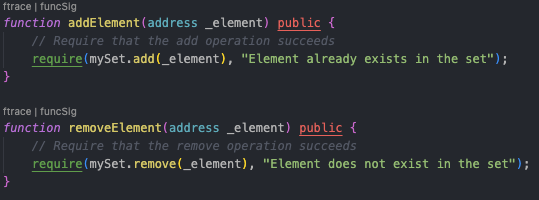
To mitigate this risk and ensure that yourcontract behaves as expected, it's essential to enforce the success of theseoperations. This can be achieved by using Solidity's require statement toassert the success of add and remove operations.
Here's an example of how you mightimplement this: