
EIP-712 solves this byintroducing a standard for signing data that is both structured and typed. Thismeans that the data being signed is organized in a specific way and that eachpiece of data is associated with a type (e.g., string, uint, etc.). This structuredapproach allows for the data to be displayed in a more user-friendly manner,making it clearer what the signer is agreeing to.
EIP-712 introduces a methodfor creating a domain separator, a unique identifier for a smart contract thatprevents signed messages from being valid across different contractsunintentionally. It also defines a way to hash structured data in a manner thatis consistent across platforms.
Define the Data Types: Thefirst step in implementing EIP-712 is to define the data types that will beused. This is done by creating a JSON schema that describes the types andstructures of the data.
Create a Domain Separator:The domain separator is a hash that uniquely identifies a smart contract'sdomain, including the contract name, version, and the network it's on. Thisprevents signatures from being valid across different domains.
Hash the Structured Data:Once the data types are defined, the structured data can be hashed using aspecific method defined in EIP-712. This hashed data can then be signed by auser's address.
Solidity Example
Implementing EIP-712 in aSolidity smart contract involves several steps. Below is a simplified exampleto illustrate the process:
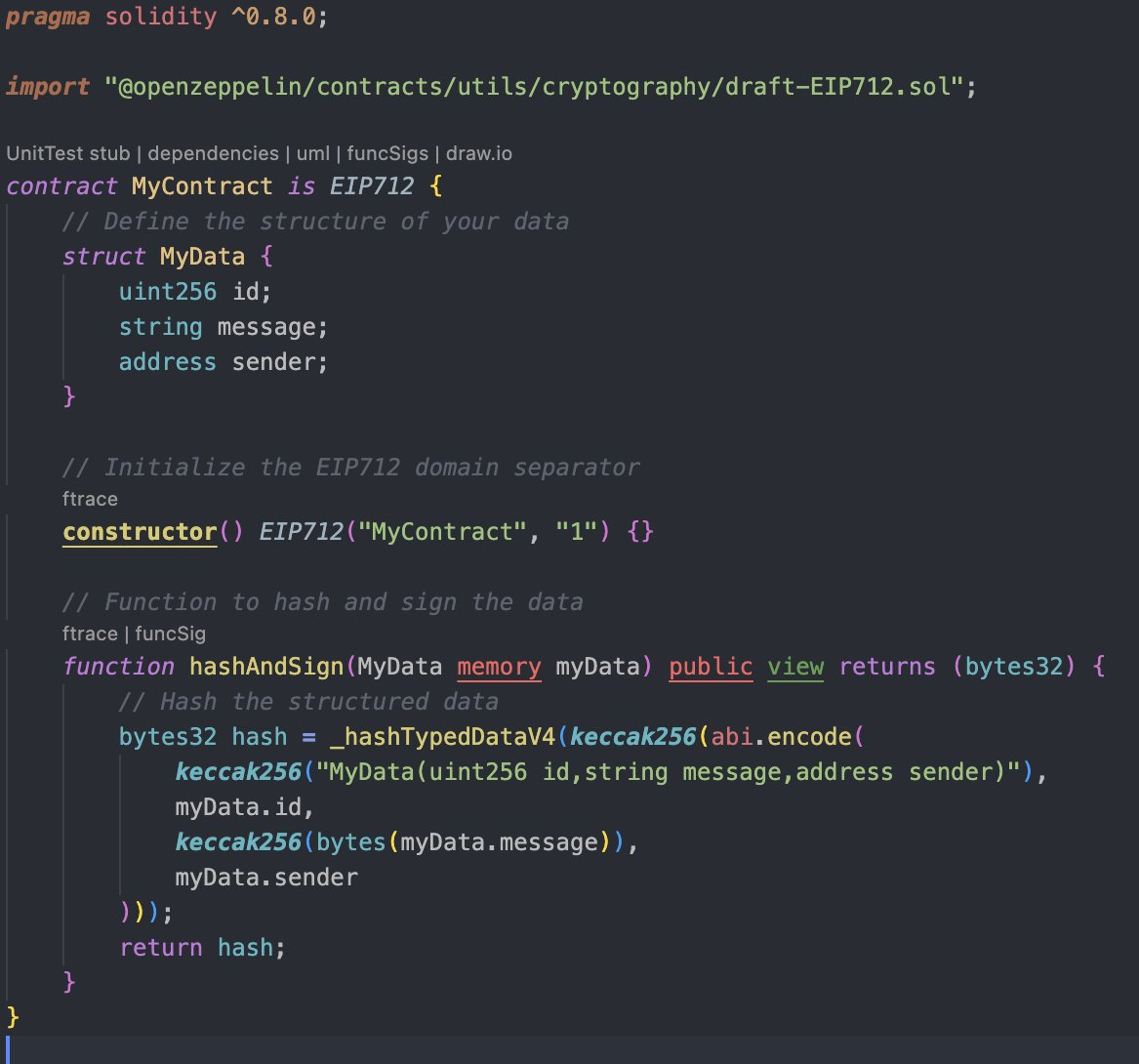
In this example, a structnamed MyData is defined, containing an id, a message, and the sender's address.The contract inherits from OpenZeppelin's EIP712 implementation, setting up adomain separator in the constructor. The hashAndSign function then demonstrateshow to hash the data according to EIP-712 standards, preparing it for signing.