Rebase tokens, first popped up during theDeFi hype around 2021, these tokens introduced a novel concept: token balancesthat increase over time, independent of the holder's direct actions, liketrading or staking.
Initially, such mechanisms were simpleschemes, offering ever-increasing token balances without a clear underlyingvalue. This was the golden ponzi time.
A turning point came with the introductionof stETH by @LidoFinance, a rebase token backed by Ethereum yields. Thisdevelopment marked a significant evolution from the early, simpler forms ofrebase tokens. stETH offers a rebasing mechanism with underlying value, specifically, theyield generated from staking Ethereum.
This approach provided a more sustainableand value-driven model for rebase tokens, moving away from the baselessinflation of token balances.
Recently, the concept of rebase tokens hasfurther evolved with the launch of @Blast_L2 (backed by @paradigm and@PopPunkOnChain) and their native yield tokens, such as USDB.
USDB's rebase mechanism is tethered to theyield generated from DAI. This means if you own USDB on base, you own a promiseto get your DAI back.
For tokens like USDB, the underlying assets(e.g., DAI) are sitting in MakerDAO. This arrangement means that holders of therebase token do not have direct ownership or control over the actualstablecoins generating the yield, introducing a layer of dependency andpotential risk.
A crucial concern with rebase tokens is theauthenticity of the yield generation process. Without transparent mechanismsand audits, there's a risk that the rebasing could be artificially inflated,undermining the token's value proposition.
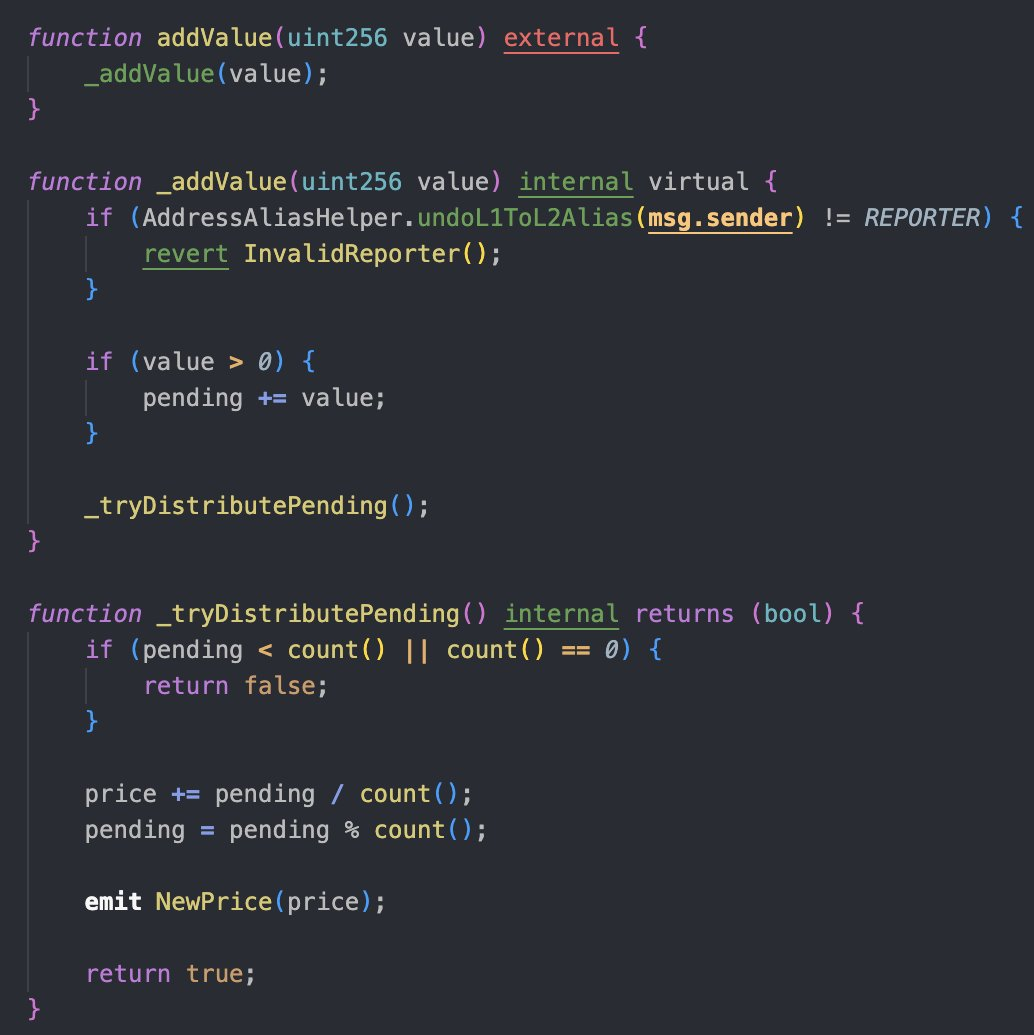
The mechanism of rebasing, particularly thefrequency and triggers for value addition through functions like addValue,could be susceptible to frontrunning. This vulnerability could allow actors toanticipate and benefit from price increases.
The core logic of USDB involves a fewessential steps:
Initial Price Setting: Upon deployment, thetoken's initial price is established, serving as a baseline for futureadjustments.

Value Addition: Through a mechanism (e.g.,a function like addValue), the token's price is periodically increased.Ideally, this increase is based on actual yield generated from the underlyingassets or strategies, reflecting true value growth.
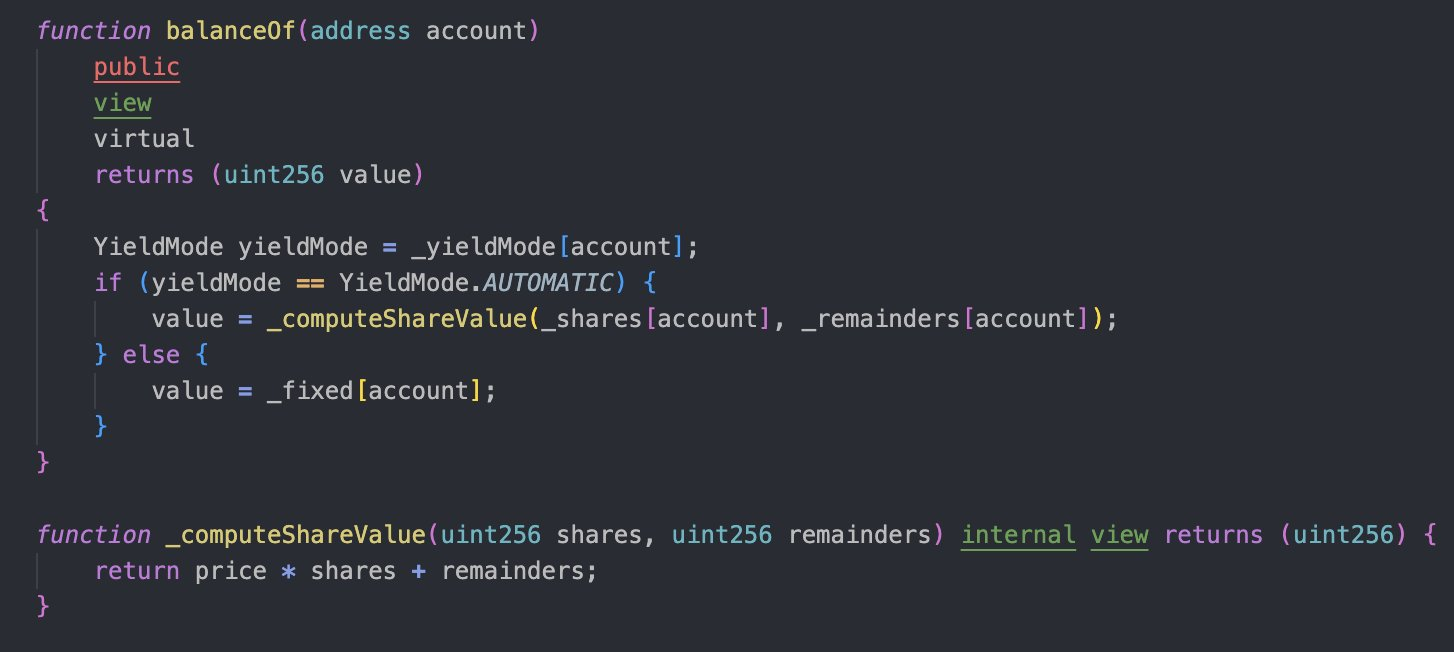
Balance Adjustment: As the token's priceincreases, so does the value of each holder's share. This is reflected as anincrease in token balance, giving the impression of a naturally appreciatingasset.