The Ethereum address denoted as address(0),commonly referred to as the zero address or null address, is represented by 0x0or 0x0000000000000000000000000000.
The zero address occupies a unique positionwithin the Ethereum network, symbolizing a null address with every byte set tozero. While it technically can receive transactions, any tokens sent to thezero address are irretrievable, as there is no mechanism to executetransactions from this address to transfer tokens out
In Solidity, uninitialized variables oftype address are automatically assigned the value of address(0). This defaultassignment mirrors the behavior of uninitialized variables in traditionalprogramming languages, which often default to zero or null values.
For instance, consider a scenario where wedefine a variable `myAddress` of type `address`:
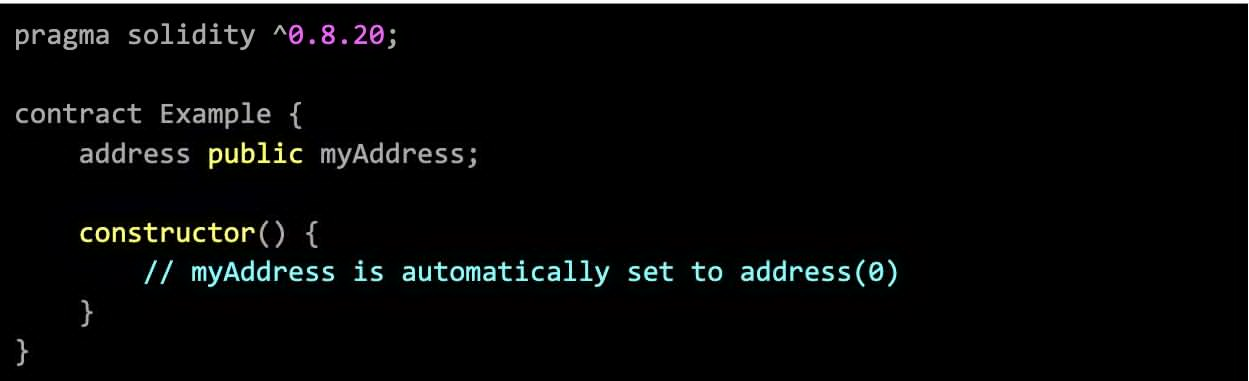
In this example, since `myAddress` isuninitialized, it is implicitly set to address(0).
address(0) can be used to verify whether anaddress has been properly initialized or assigned. If a variable holds thevalue address(0), it indicates that the address has not been set or is invalid,enabling smart contracts to handle such cases accordingly.
Here's an example snippet demonstrating howaddress(0) can be used as a sentinel value for checking the validity ofEthereum addresses within a smart contract:
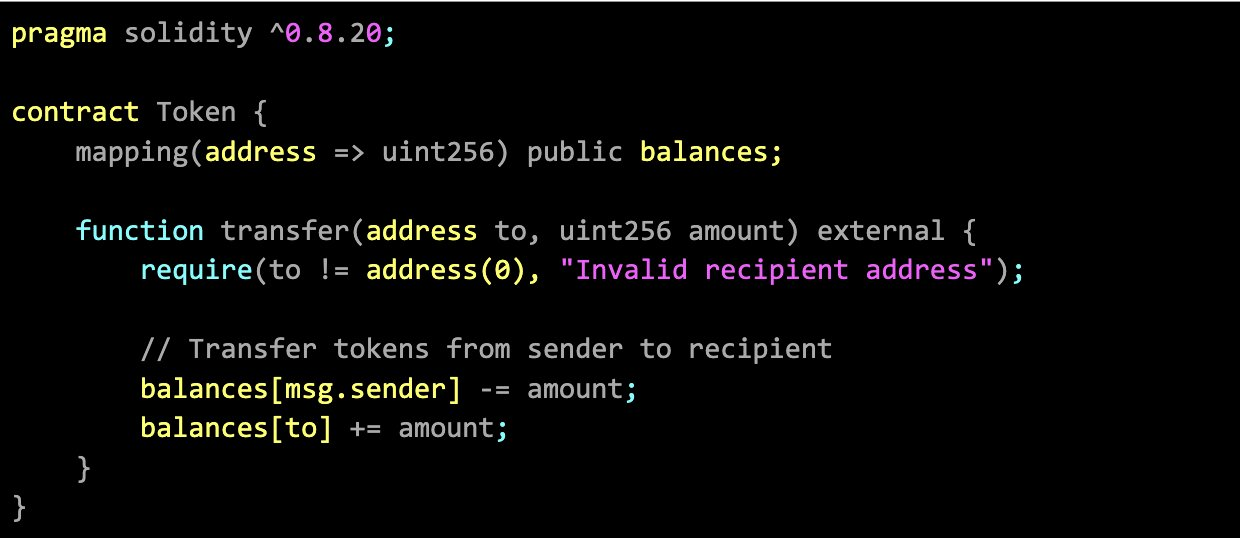
In this example, the transfer functionensures that the recipient address (to) is not equal to address(0) beforeproceeding with the token transfer. If the recipient address is address(0),which represents an uninitialized or vacant state, the function reverts with anerror message indicating an invalid recipient address.
In contract interactions, address(0) playsa significant role in signaling error conditions or exceptional scenarios. Wheninteracting with external contracts, functions that return address types canutilize address(0) to signify an unsuccessful operation or the absence of avalid address.
For example, consider a scenario where asmart contract interacts with another contract to retrieve an address. If therequested address is not found or the operation fails, the function may returnaddress(0) to indicate this condition. This allows the calling contract todetect and handle such scenarios appropriately.
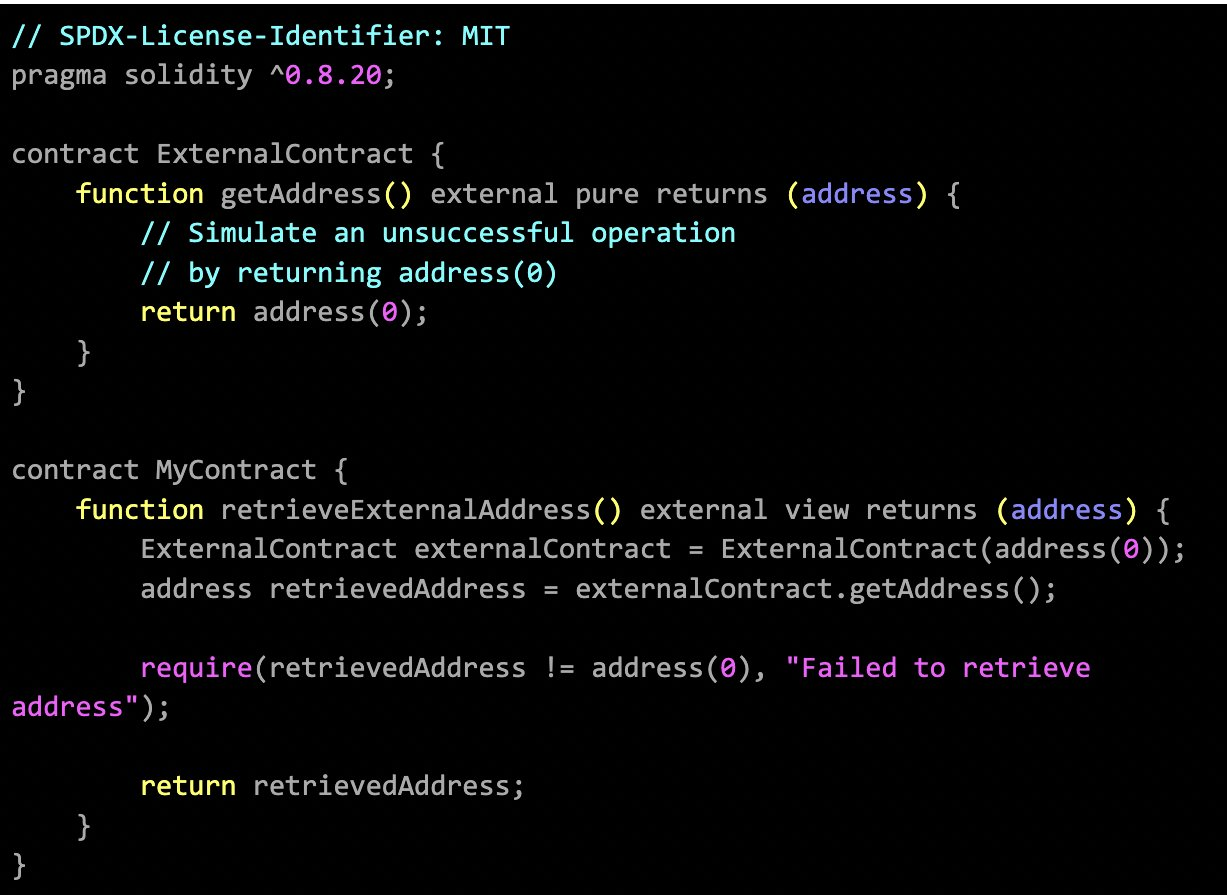
In this example, theretrieveExternalAddress function interacts with an external contract (that isnot existing) to retrieve an address. If the operation fails and address(0) isreturned, the function reverts the transaction with an error message.
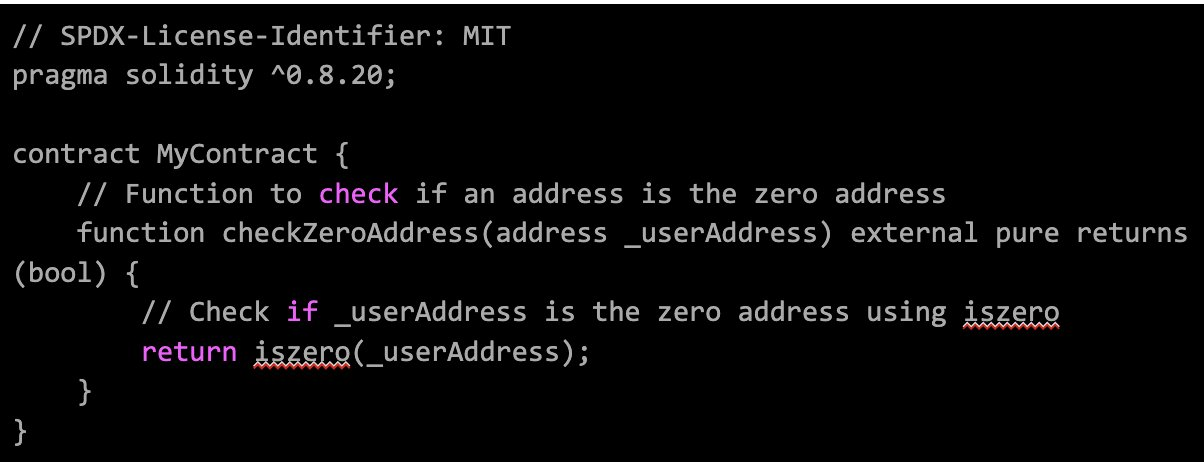
In the following example, thecheckZeroAddress function takes an address _userAddress as input and uses theiszero function to check if _userAddress is the zero address.
If _userAddress is indeed the zero address,the function will return true; otherwise, it will return false: